One CAHNR professor is working to demystify the potential of composting
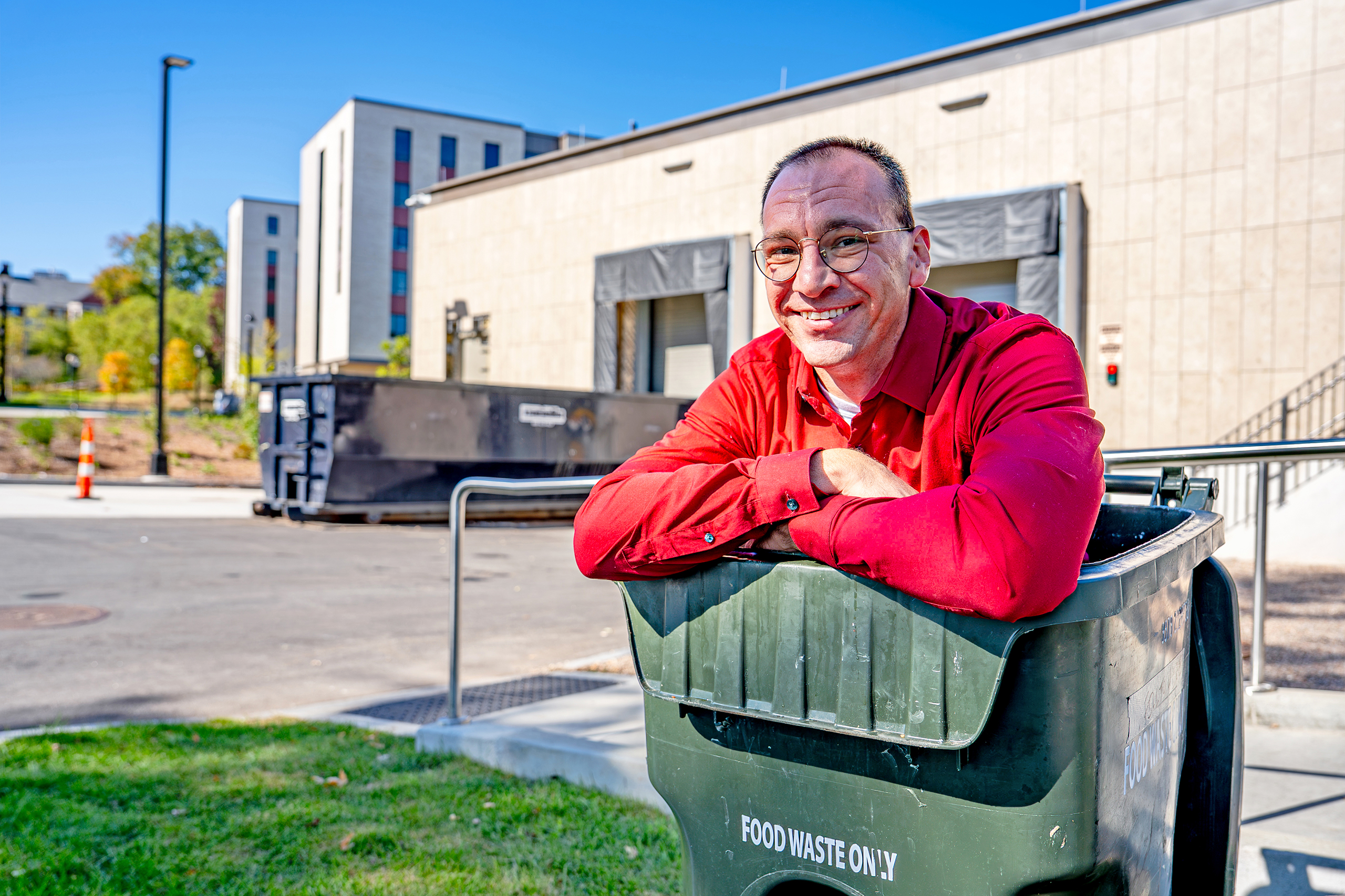
Jackson Somers cares a lot about trash. An assistant professor of agricultural and resource economics, his work focuses on the economic and societal factors involved with many aspects of waste management, including composting.
“As individuals, we produce a lot of food waste, and it’s something we should be cognizant of. I think, inherently, we don’t want to be wasteful. But for some people, composting is just a high burden of effort.”
Somers investigated participation rates and the economics behind residential composting programs, which prevent methane emissions from trash decomposing in landfills. He found that, from a purely economic perspective, the cost to run a compost program outstrips the social benefit of avoiding putting that methane into the atmosphere, especially with the observed low participation rates.
However, this doesn’t necessarily mean composting programs are never worth the investment. From the need to build or expand new landfills to keeping pests like rats under control, the economic and societal benefits of composting programs will continue to evolve.
“A one-size-fits-all solution is not the answer. The solution in northwestern Connecticut is very different from the solution in Stamford or Hartford.”
There’s also a question of scale when it comes to food waste, especially from businesses like grocery stores.
“That’s where I think you can see large benefits. I think that’s something we should consider more than we do.”